
Share Priscilla Hopkirk's obituary with others.
Invite friends and family to read the obituary and add memories.
Stay updated
We'll notify you when service details or new memories are added.
You're now following this obituary
We'll email you when there are updates.
Select your format and elements to print

IN LOVING MEMORY OF Priscilla Hopkirk
Priscilla
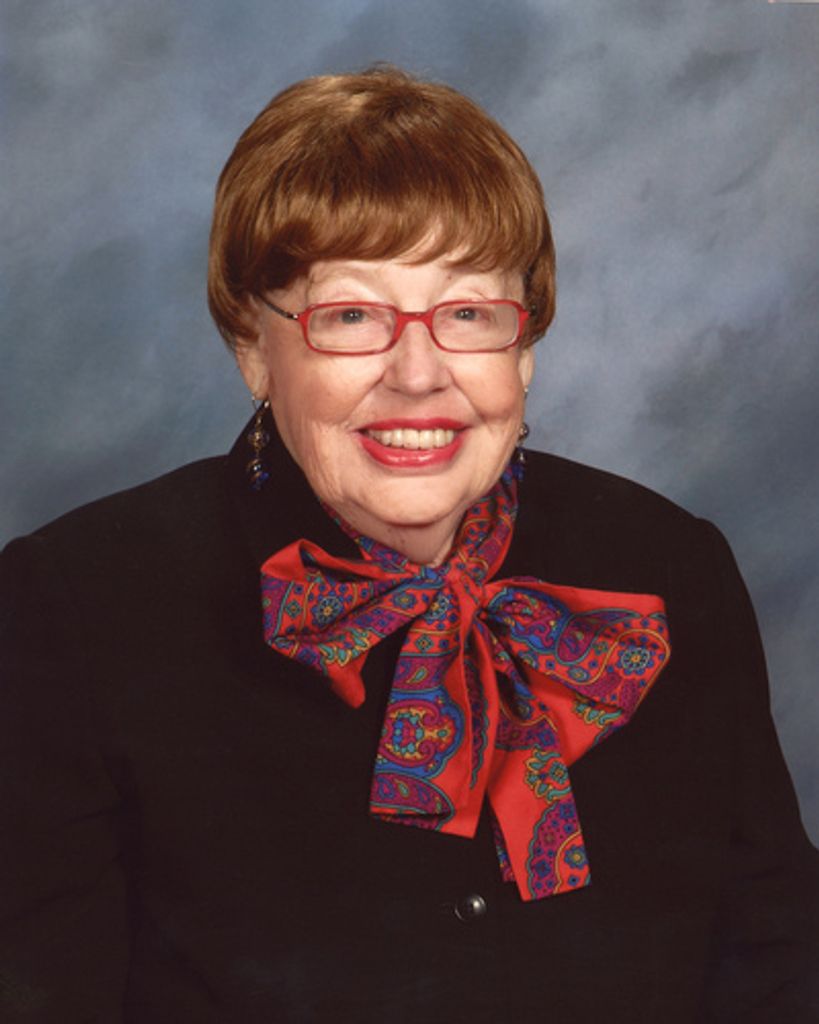
Hopkirk
d. Jun 22, 2021
Priscilla Hopkirk's Obituary
PRISCILLA HOPKIRK, VILLANOVA POLITICAL SCIENCE PROFESSOR, 98
Priscilla Marguerite Greeley Hopkirk, who earned a Ph.D. in Government from Harvard University almost 70 years ago, experienced much sex discrimination early in her career, yet went on to become the chairperson of Villanova University's political science department and president of the Pennsylvania Political Science Association, died on June 22, 2021 at 98. The causes of death while on hospice at Sunrise of Granite Run, an assisted living facility near Media, PA, included pneumonia and complications of dementia following strokes.
Professor Hopkirk was born on December 7, 1922, in Schenectady, NY, the only child of Arthur Lewis Greeley, a chemistry instructor at Union College, and Ella Marguerite Greeley (nee Coats), a librarian by training and an amateur artist. Her mother contracted a potentially fatal case of scarlet fever late in pregnancy and was attended by nurses around the clock after giving birth, while Priscilla was cared for by her maternal grandmother.
When Priscilla was a young child, the family moved to Boston to live with her paternal grandfather and his wife after her father left the labor force due to what appears to have been a major case of depression. After an extended period, her father recovered and became a science textbook editor at what became Ginn and Company. The family moved to Belmont, MA.
Priscilla was introduced to politics early. At the age of 5, she waved a flag when Herbert Hoover drove by during the 1928 presidential campaign. When she recited a disparaging saying about Hoover's opponent, Al Smith, her mother asked how she would feel if "Mr. Smith" passed by.
At holiday parades, Priscilla was fascinated by the Civil War veterans. They were much more interesting than World War I veterans such as her father.
In lieu of a babysitter, her parents took her to European films screened by David Susskind, who decades later was a public television host. She absorbed some of the information about adult life better than her parents may have realized. Early intellectual influences included John Stuart Mills and William James' The Varieties of Religious Experience .
During the Great Depression, Priscilla's father remained employed but experienced repeated salary cuts, as many did. However, the family could afford to vacation in the artist's colony of Rockport, MA, north of Boston. Priscilla learned to swim in the frigid Atlantic and returned there for decades. She was an avid swimmer for most of her life.
After graduating from Belmont High School in 1941, Hopkirk enrolled at Radcliffe College, part of Harvard University, where tuition for women was $450 per year, $50 more than for men enrolled at Harvard College. She was later embarrassed to recall that she was so excited when her boyfriend came to wish her a happy birthday during her freshman year that she forgot to mention the news she had heard on the radio that Japan had bombed Pearl Harbor.
In Summer 1944, she worked for the Statistics Laboratory of the Chemical Warfare Service where, before computers, she made calculations using a slide rule and inspected gas masks at a factory for a week. The union threatened to strike if the inspectors did not stand as the workers had to do; so they stood. So many defects were found by the inspection team that the U.S. Government cancelled its contract with Rubber Maid. After that week, she developed great sympathy for those who worked on assembly lines.
Outside football games earlier in the war, Hopkirk solicited relief donations for the Soviet Union, an ally of the United States, from fur-coat-clad alumni and their wives. She joined other members of the Radcliffe Choral Society to sing for sailors on an aircraft carrier in the Boston Navy Yard. She often told of having to climb a steep gangplank in high heels in the dark due to the wartime blackout.
In an interview with The Harvard Crimson at the time of her 50 th college reunion, Hopkirk recalled that views toward women on campus were "rather humiliating." Radcliffe students were not allowed to use most of the main library. During her freshman year, professors delivered the same lecture to Harvard men and Radcliffe women in classrooms a few blocks apart. A friend who was the only woman in a science class was allowed to listen to the men's lecture by sitting in the hall near the open door. Starting in her sophomore year, men left campus for the military, and men and women were permitted in the same classroom.
Professor Hopkirk took an introductory Government course her first semester of college, a decision that changed her life. Samuel Beer, the graduate student who taught the course, had been a newspaper reporter and a speechwriter for FDR, and later became an advisor to Prime Minister Tony Blair. He was so inspiring that Hopkirk decided to major in Government. Political action committees were a new phenomenon and Hopkirk wrote her senior thesis on the political action committee of the Congress of Industrial Relations (CIO), relying on primary sources including interviews with labor union leaders.
A few weeks before graduating with a Bachelor's degree (A.B.) in 1945, Hopkirk was in rehearsal with the Radcliffe Choral Society, the Harvard Glee Club, and the Boston Symphony Orchestra when the conductor, Serge Koussevitzky, announced: "Ladies and Gentlemen, the War in Europe is over." Although the announcement turned out to be a few days' premature, the orchestra began to play The Star-Spangled Banner. Hopkirk recalled that everyone was overcome by emotion – particularly those Jewish students who had escaped Nazi tyranny.
Hopkirk initially did not think she could afford to go to graduate school. Harvard did not offer fellowships for women graduate students. Hopkirk had commuted for her first 2 ½ years of college and had to use her own earnings to afford to move into a dorm in the middle of her junior year. Without her knowledge, her parents had cashed in her father's World War I veteran's life insurance policy to pay for her last semester. Then, Dr. Morris Lambie, a former professor, offered Hopkirk the chance to work as a researcher at the Bureau for Municipal Government, part of the Graduate School of Public Administration, while enrolled half-time in the graduate program in Government. As a researcher, she helped produce a publication entitled "Metropolis in Maps." On the side, Lambie asked Hopkirk to tutor a graduate student who had been a general in Chiang Kai-shek's Nationalist Chinese army in colloquial English.
Hopkirk was one of only three female graduate students in Government that year and the only one concentrating in American Government. In all but one of her Government classes, she was the only woman. In Summer 1949, Hopkirk attended a two-week institute in Washington, DC, for college-level educators in the field of government. A group photograph taken outside the White House with President Truman shows her once again as one of only three women.
When Hopkirk was awarded a Master's degree (A.M.) at Harvard's 1947 Commencement, she heard Secretary of State George Marshall give a short speech in which he publicly presented for the first time an outline for the reconstruction of post-war Europe that came to be known as the Marshall Plan. Commencement in 1952 was less significant to the world, but was important to Hopkirk as she received her Ph.D. after completing a dissertation on The County in Massachusetts with Lambie serving as her advisor.
Early in her career, Hopkirk sent out approximately 400 resumes with cover letters. She received no interviews. One man wrote that he was impressed by her credentials, but that frankly he would rather hire a man. As a graduate student, she was hired as a researcher for Boston University's Bureau for Public Administration and taught courses there. In 1950, she was hired for one year as an instructor at the College of Wooster in Ohio two weeks before classes began because she was available when a male instructor was drafted into the Korean War.
After earning her Ph.D., Hopkirk taught from 1952-54 as an instructor at Wilson College, a small women's college in Chambersburg, PA. She was the faculty advisor for both the College Republicans and the College Democrats. As a young single woman, she took the bus to Washington, DC as many weekends as possible to avoid sleepy Saturday nights when some professors played chess.
Hopkirk made a more permanent escape when she accepted an offer to be an assistant professor at Skidmore College in Saratoga Springs, NY. This was the only time early in her career that she was given that title, rather than a less prestigious one, and the new job came with higher pay.
In Fall 1954, the future Priscilla Hopkirk attended a meeting of the American Society for Public Administration in New York City and met John W. Hopkirk, then an instructor at Harpur College (now part of Binghamton University) who was working on his doctoral dissertation at Princeton. Two years later, when he moved to Albany, NY to work in state government and was closer to Skidmore, they started dating. Six weeks later they were engaged, and they married in the Harvard Memorial Church in July 1957.
Priscilla Hopkirk thought she might never marry. Her college class had a record high percentage of women who never married because World War II meant few men were around when they were undergraduates. By the time Greeley married she was 34 – far above the median age for a woman's first marriage in the 1950's – and the pool of men who would consider marrying a woman with a Ph.D. was small.
Priscilla Hopkirk left Skidmore when she married and moved to Albany. Her husband had more cooking experience and she tried to learn to cook by reading cookbooks. After two weeks, her husband, who was not a supporter of traditional gender roles of the 1950's, asked when she planned to get a job. She soon was hired as a planning technician for the New York State Commerce Department, a job usually held by someone with an urban planning degree. She reviewed grant applications from local governments that submitted municipal plans. She held that position until she gave birth to a son in April 1959. A second son was born in Ridley Park, PA in 1963.
In September 1960, Hopkirk's husband, having earned his doctorate two years earlier, accepted a position as a professor at Pennsylvania Military College (PMC; now Widener University) in Chester, PA. After a few years out of the labor force, Hopkirk resumed teaching evening courses as an adjunct instructor at the Camden, NJ campus of Rutgers University, and evening and summer school courses at PMC. Sometimes students who had failed a course taught by her husband went to summer school and discovered that another Hopkirk was in front of the class as they tried to make up lost credits.
From approximately 1966 to 1968, Hopkirk was the Chairman (sic) of the Delaware County Council of the Leagues of Women Voters (LWV). Hopkirk advocated for the LWV's position favoring creation of a community college in Delaware County. Although in 2021 President Biden supports free community college, the mere creation of Delaware County Community College was controversial in 1966 and 1967. In 1968, there was a referendum on the creation of a county health department for Delaware County. The LWV supported creating a health department, but that position did not prevail at the polls. In 2019, Democrats running for Delaware County Council supported creation of a county health department and won control of county government for the first time since the Civil War. Months later, when the Covid-19 pandemic hit, Delaware County was the only county in the Philadelphia region without a county health department. In the last months of Hopkirk's life, steps were finally being taken to have a health department by 2022.
In 1966, Hopkirk moderated an event at which candidates in Pennsylvania's Seventh Congressional District appeared. Afterward, she mentioned to John Logue, the Democratic candidate and a political science professor at Villanova University, that she was looking for a full- time position in political science. Later, Logue told her of an opening. Hopkirk was hired as an assistant professor and the first woman in Villanova's political science department in 1967. She remained there until 1994.
Hopkirk served as chairperson of Villanova's political science department from 1978 to 1988. When she became chairperson, she was the first woman to serve in that capacity in any department at Villanova outside of the School of Nursing. During her tenure as chairperson, two more women joined the department. Earlier, from 1976 to 1978, Hopkirk was president of the Villanova chapter of the American Association of University Professors. For many years, she was the pre-law advisor.
Hopkirk served as president of the Pennsylvania Political Science Association and as an officer of the Northeastern Political Science Association. She was active in the Philadelphia chapter of the American Society for Public Administration and served on the board of Family and Community Service of Delaware County.
Regarding the practice of politics, Hopkirk was a pragmatist. For example, in 1968, she was a supporter of Hubert Humphrey, a fellow political scientist whose students' challenge to get involved in the political system led him to run for Mayor of Minneapolis. She admired his speech on civil rights to the 1948 Democratic Convention and his leadership in passing the Civil Rights Act of 1964. She decried the moral purity of liberals who refused to vote for Humphrey in protest to President Johnson's policies in Vietnam and thereby enabled a narrow victory by Richard Nixon, a figure whom she despised over his Red-baiting during the McCarthy era.
In 1973, Hopkirk ran for a seat on a Government Study Commission that would have the power to propose changes in the structure and scope of Delaware County's government, an issue of particular interest to Hopkirk given that her doctoral dissertation was about county governments. The referendum asked voters to decide whether to authorize a study and simultaneously to select 11 members of the Commission to sit if the study was approved. Any changes would be voted on in a subsequent referendum. Although nominally non-partisan, candidates ran on slates. Hopkirk was endorsed by the Democratic Party, the "Vote Yes" Committee, and the Delaware County AFL-CIO Council. Conducting a study was approved and candidates backed by the Republican machine won all 11 seats. Out of 41 candidates, Hopkirk won the highest number of votes among candidates who were not backed by the Republican Party.
Hopkirk spent years working on a book, first on her own and later with her husband, entitled The Blue Route: The Politics of Road Building From 1927-1991 . Due to her being well past typical retirement age, the book was not published even though at least 31 chapters and approximately 150 interviews were completed. It is anticipated that research materials and manuscripts will be donated to a library in Delaware County so that they will be available to future scholars.
Before her husband's death in 2006 after almost 49 years of marriage, Hopkirk traveled with him to dozens of countries on all continents except Antarctica. Into her 80's, she still enjoyed ballroom dancing with her husband. In retirement, she remained active in The League of Women Voters and attended music appreciation lectures at the library into her mid-90's. Starting in the 1990's, Hopkirk was active in the Delaware County Coalition to Save Our Safety Net.
A memorial service will be held at the Unitarian Universalist Church of Delaware County near Media, PA, later this year. Hopkirk was a member of the church for 60 years and served twice as president of its Board of Trustees during the 1970's. She sang in the church's chorus for over 40 years until she was 96, and also played the piano there. For decades, until turning over the responsibility when she was in her early 90's, she organized collecting toys and other gifts from the congregation to be distributed to families in December through Delaware County Children and Youth Services.
Immediate survivors include her sons, Arthur of New York City and Howard (Susan) of Hershey, PA, both of whom are attorneys. She is also survived by two grandchildren, Robert and Gretchen Hopkirk.
Hopkirk remained interested in politics throughout her life. Hopkirk was born during the Administration of President Warren G. Harding, whom political scientists often ranked as the worst president. In her last years, she feared she might die during the presidency of someone she viewed as much worse than Harding. She was glad to see a new president in 2021.
Hopkirk overcame numerous health crises over her last 14 years. When going on home hospice at 95 after a hospitalization, she was initially anxious about the grim prognosis. However, Hopkirk soon started joking with the visiting nurse as to whether she had a few weeks left. After signs of continued life including pushing her empty wheelchair on the boardwalk at Ocean Grove, NJ when she wanted to see the ocean again, the hospice's medical director discharged her because he could not in good faith certify that she was likely to die within six months.
When she went to a rehabilitation facility after a stroke at 96, she asked that Michele Obama's autobiography be brought to her because she was scheduled to lead a discussion of it for her book club. In March 2020, shortly before the pandemic shut down normal life, she paid her last visit to a museum to see an exhibit on women's suffrage and the ratification of the 19 th Amendment guaranteeing the right of women to vote 100 years before.
Hopkirk believed the secret to successful aging is to cultivate friends who are 15 to 20 years younger than yourself. Not only does it allow you to remain engaged in stimulating activities after you can no longer drive, but it makes it less likely that your friends will die before you do.
Contributions in Priscilla Greeley Hopkirk's memory may be made to the Unitarian Universalist Church of Delaware County, 145 W. Rose Tree Road, Media, PA 19063; Villanova University, Villanova.edu; or Fox Chase Cancer Center, foxchase.org.
Arrangements: Rigby Harting & Hagan Funeral Home
www.haganfuneralhome.com
Priscilla Hopkirk's Guestbook
Visits: 9
This site is protected by reCAPTCHA and the
Google Privacy Policy and Terms of Service apply.
Service map data © OpenStreetMap contributors